
AT A GLANCE…
The recent US‑Israeli attack on Iran has caused major global disruption, particularly due to instability at the Strait of Hormuz, a critical trade route. Ongoing threats to close the Strait and uncertainty over when it will fully reopen are creating significant supply chain challenges. In this context, businesses must assess whether contractual protections such as force majeure, material adverse change clauses, or the doctrine of frustration apply to their circumstances. To rely on these remedies, parties must show that the qualifying event is covered by the contract, directly caused non‑performance, and that they took reasonable steps to mitigate its effects. Ultimately, businesses should document all impacts and mitigation efforts carefully and, where possible, seek negotiated solutions to avoid costly disputes.
KEY POINTS
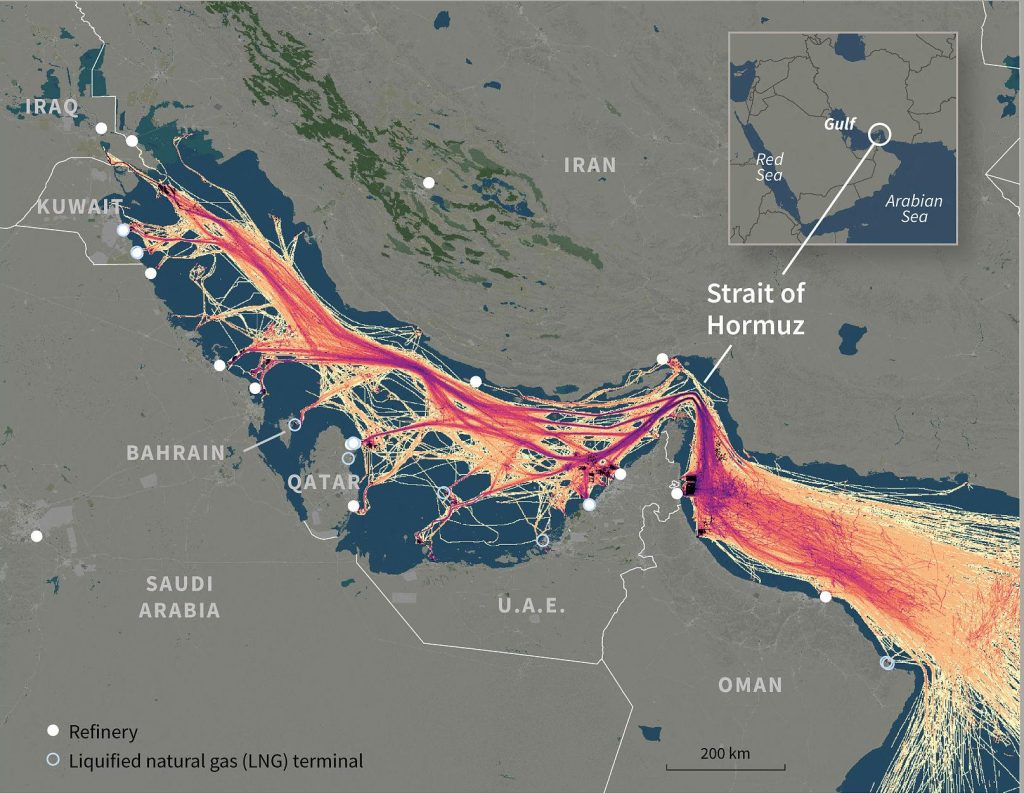
The attack on Iran by the United States and Israel last month has led to widespread social and economic impact worldwide. A key factor in the global cost of the war has been the disruption at the Strait of Hormuz, a major global trade route. Incidents against carrier vessels and threats from the Iranian government to close the Strait have all contributed to a major global supply chain disruption.
While the US President has made promises to get the Strait open ‘one way or the other’, there is still considerable uncertainty as to whether the Strait will be fully operational in the foreseeable future, especially since Iran’s new leadership has stated that Iran should keep blocking the Strait.
In light of these uncertain geopolitical circumstances, parties need to consider what contractual and other remedies are available to them, and whether these are fully accessible in the circumstances.
Force majeure events are circumstances beyond the reasonable control of the parties, often including extreme weather events, natural disasters, government action and war.
English law does not itself contain a doctrine of force majeure, so the protection will only operate if the contract itself expressly includes a force majeure clause, allowing certain obligations to not be performed, and even for the contract to be suspended or terminated in specific circumstances. Parties should therefore ensure that their agreements have the required clause and determine its scope.
The event must qualify under the force majeure clause in the contract
It is crucial that the force majeure clause is drafted specifically, as an ambiguous clause is likely to be rejected by courts in practice. The clause should specify the events that qualify as a force majeure.
‘War’ is a common qualifying event under force majeure clauses. Other examples of events that could apply under current geopolitical circumstances include government restrictions, civil unrest, unsafe transport, which are especially common in shipping agreements.
Direct causation between the event and inability to perform must be shown
It must be established that the event prevented or otherwise impacted the performance of the contractual obligations by a party. The breach must have occurred as a result of the force majeure event. If the breach would have occurred in any event, the protection of the force majeure clause cannot be relied on by the party in breach.
In the context of the closure of the Strait of Hormuz, a ship being unable to cross the Strait to deliver cargo can be a qualifying factor, though the specific clause must be consulted to confirm.
Notice and Duty to Mitigate
A party seeking to rely on a force majeure clause must not only show that the event qualifying under the contract has occurred and caused their breach, but also that they have taken all reasonable steps to avoid its operation or have mitigated its results. The contract does not have to specifically provide for a duty to mitigate – this is an implied duty and will operate regardless.
For example, where the party was unable to deliver cargo due to the impacts of the war on trade routes, they show that they took reasonable steps to find alternative routes.
Consequences of invoking force majeure
While the clause can be beneficial in protecting a party from liability when they are unable to perform their obligations due to circumstances outside of their control, there are risks associated with invoking force majeure.
When considering whether to invoke the protection afforded by the clause, a party should assess the long-term risks that may arise and balance them with the shorter-term benefit that invoking the clause may present.
For example, a counterparty may have the right to terminate the contract if there is a significant delay in the performance of obligations, which could in the long-term cost a business due to the loss of a potentially lucrative contract. The party invoking it must therefore be absolutely sure that the clause applies to their circumstances and must show clearly that they took steps to mitigate this.
Contracts may also specify other remedies that a party has when its counterparty does not perform its obligations, including contingency measures, and a potential impact on exclusivity of supply of goods or services in supplier agreements, which can have serious long-term consequences.
Alternative Remedies
Aside from force majeure clauses, there are other remedies available that could serve to protect either or both of the parties.
Material Adverse Change (‘MAC’) Clauses
To consider relying on such clause, the contract must expressly set out a MAC clause, and the clause must be drafted in a way to apply to the qualifying events.
In practice, these clauses are more difficult to rely on than force majeure, as courts are generally reluctant to enforce without the burden of proof being satisfied that the event did in fact cause a material adverse change to the circumstances of the contract. Generally, the ‘change’ must have been significant and with a lasting negative impact on a party’s financial condition, setting a high bar to access remedies provided under this clause. Due to the uncertainty of the current geopolitical situation in the region, it is difficult to prove that the circumstances would be enduring.
However, having a MAC clause in the contract can provide parties with a foundation to negotiate a variation in light of the circumstances, which allows them to avoid court proceedings, additional costs, and can preserve the business relationship.
Frustration
Frustration is a statutory doctrine available under UK law, which can occur when an unforeseeable event, which is not the fault of either party, fundamentally changes the contract to the point where it can no longer be performed. This is a remedy that is available where the contract does not provide for force majeure or MAC circumstances.
While this doctrine is technically available to parties under English law, in practice, this is very narrowly applicable, and the burden of proving its appliable is high. Simply showing that an obligation has become more difficult to perform will not be sufficient.
In any event, parties should always seek to mitigate any potential loss.
THINGS TO CONSIDER
Before invoking a force majeure clause, a business must review it to confirm that the event is out of their control and specifically covered by the clause, that there is a direct causal link between the event and their inability to perform their obligation, and that they serve the required notice on their counterparty, and are able to show that they exercised reasonable endeavours to mitigate the issue.
Businesses should review their contracts to confirm how far they cover any possible breach that could arise out of the war in Iran and its wider impacts.
Importantly, businesses should also keep a documented trail of evidence to ensure that if the matter proceeds to litigation, they are able to evidence the impact of the event on their ability to perform their obligations. Additionally, any actions taken to mitigate the situation should also be recorded and evidenced where possible.
The best approach is to avoid conflict with a counterparty altogether, as avoiding litigation or even alternative dispute resolution will lead to increased costs and time for both parties, and is likely to have an adverse impact on the commercial relationship.